Regulatory Requirements
Identify the applicable AML legislation, supervisory guidance, and sector-specific requirements relevant to your business.
Establish a clear, documented approach to anti-money laundering compliance. Develop policies and procedures that reflect your business activities, risk exposure, internal responsibilities, and applicable regulatory requirements.
POLICY FRAMEWORK


Clear Documentation
Policies designed around applicable requirements
AML policies establish the principles and responsibilities that guide an organisation's compliance framework. Procedures explain how employees apply those principles during everyday business activities.
Together, they help create consistency in customer checks, risk assessment, suspicious activity escalation, record keeping, and internal oversight.
Set consistent expectations across relevant teams.
Clarify ownership of AML tasks and decisions.
Support appropriate customer checks and monitoring.
Provide a documented basis for reviews and improvements.
The framework should reflect the organisation's risk profile and the requirements that apply to its activities. Relevant policy areas may include the following.
Identify the applicable AML legislation, supervisory guidance, and sector-specific requirements relevant to your business.
Define who is responsible for compliance oversight, customer checks, internal escalation, record keeping, and policy reviews.
Set out procedures for customer identification, verification, beneficial ownership checks, and enhanced due diligence where required.
Establish clear internal processes for identifying, documenting, escalating, and reporting suspicious activity when required.
Document appropriate arrangements for maintaining, protecting, retrieving, and retaining relevant compliance records.
Define how policies are reviewed, how control gaps are addressed, and how changes in risks or applicable requirements are incorporated.
The documentation required will depend on your business, risk assessment, and applicable regulatory obligations. Common policy and procedure areas can include:
A documented overview of the organisation's AML framework, governance, and control principles.
Procedures for customer identification, verification, risk classification, and ongoing due diligence.
Internal processes for recognising concerns, escalating cases, and making reports through the appropriate channels.
Guidance on maintaining and retrieving relevant customer, transaction, and compliance records.
A framework for communicating responsibilities and providing suitable AML training to employees.
Arrangements for reporting control gaps, assigning corrective actions, and reviewing policy effectiveness.
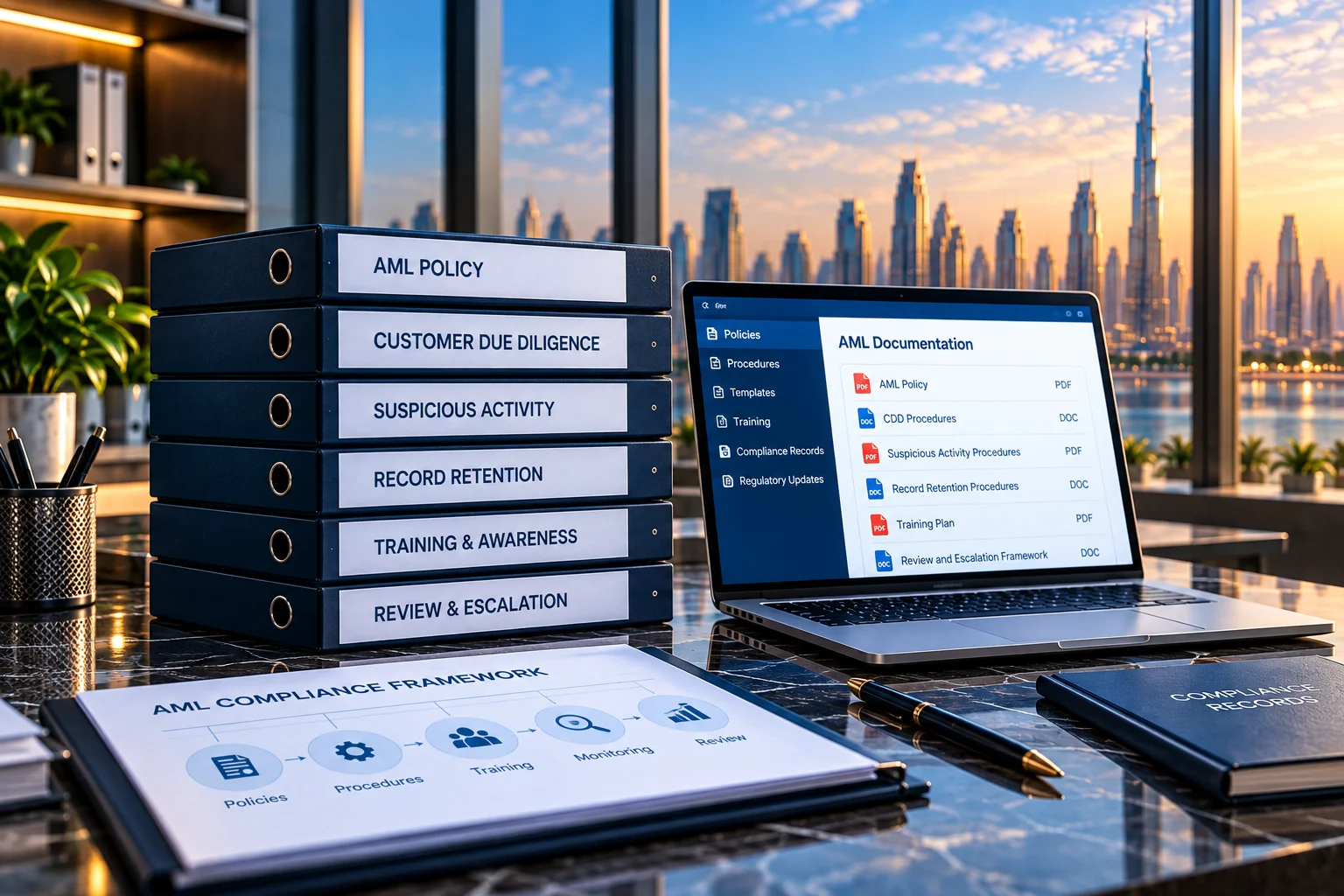
A structured process helps turn written policies into practical procedures that employees can understand and follow.
Review business activities, customers, services, delivery channels, and applicable regulatory requirements.
Document suitable AML controls, procedures, responsibilities, and escalation arrangements.
Communicate requirements to relevant employees and establish practical processes for day-to-day compliance.
Assess whether the framework remains appropriate and update documentation when necessary.

Policies should not remain static. Changes in business activities, customer risk, internal controls, or applicable regulatory requirements may mean that procedures need to be reviewed and updated.
Review policies at appropriate intervals.
Assess the impact of relevant regulatory changes.
Communicate updated procedures to employees.
Document reviews and follow up on identified gaps.
This page provides general information and is not legal advice. The appropriate AML policies and procedures depend on the applicable UAE legal framework, supervisory authority, sector, and individual business circumstances. Confirm the requirements applicable to your organisation before adopting a policy framework.
Discuss your existing documentation, business activities, and policy development requirements with our team.